
WSAVA Webinar Series sponsored by IDEXX

2025

This Webinar Series is Supported by

Diagnostics in Veterinary Practice

WSAVA is teaming up with IDEXX to bring you the latest expert-led content – this time on diagnostics in veterinary practice.

This webinar series has been designed in partnership with our Silver Partner IDEXX, drawing insights from the recent learning needs survey. The survey was conducted to gauge the learning requirements within the WSAVA community, and a prominent theme surfaced—enhancing knowledge and proficiency in diagnostic techniques in real-world veterinary practice. With this insight at its core, our webinar series is dedicated to addressing these crucial learning needs.

To find out more about the content and speaker for each webinar, and to register, follow the links below. If you cannot watch the webinar live, no need to worry. Register and you can view the webinar on-demand afterwards.

Feline Triaditis - A True Diagnostic and Therapeutic Challenge

Cats frequently suffer from inflammatory conditions of the pancreas, the biliary tree, and the intestinal tract, which is often called triaditis. This session will detail diagnostic criteria for triaditis and discuss management strategies.

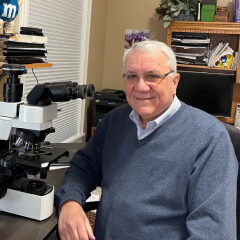
 

Dr Joerg Steiner (Dr Med Vet, PhD, DACVIM-SAIM, DECVIM-CA, AGAF)
Speaker

The holistic guide to CBC; numbers, plots and morphology. Making sense of blood cell profiles - Part 1

This will be a case-based review of interpretation of numerical and graphic red blood cell (RBC) parameters, emphasizing the benefit of in-house analyzers. These will be correlated with the value of RBC morphology in arriving at a diagnosis. We will review how to best utilize HCT, RBC count, hemoglobin concentration, as well as the RBC indices and reticulocyte parameters in dogs and cats.
We will also discuss how to squeeze information out of the cytograms. At the end of this webinar, the attendees will be able to classify anemias as regenerative and non-regenerative, developing and chronic iron deficiency, and utilize analyzer cytograms to identify RBC morphologic abnormalities and when a blood film MUST be evaluated microscopically.
Dr Dennis DeNicola
Speaker
Dr Guillermo Couto
Speaker

The holistic guide to CBC; numbers, plots and morphology. Making sense of blood cell profiles - Part 2

This will be a case-based review of interpretation of numerical and graphic white blood cell (WBC) parameters, emphasizing the benefit of in-house analyzers. These will be correlated with the value of WBC morphology (both using cytograms and blood film evaluation) in arriving at a diagnosis. Cases will illustrate the fact that a high proportion of dogs and cats with severe inflammation or infection have a normal neutrophil and WBC count within the reference intervals. The prognostic value of toxic neutrophils and/or left shift will be emphasized.
Dr Dennis DeNicola
Speaker
Dr Guillermo Couto
Speaker

5 urine abnormalities never to ignore in your patients

A urinalysis consisting of urine specific gravity (refractometer), urine chemistries (dipstick), and sediment examination (microscope, automated analyzer) is an essential component of the laboratory investigation of healthy and sick pets as it may reveal the earliest and perhaps only evidence of disease.  This talk will highlight urinalysis findings that should prompt further evaluation, as well as appropriate urine sample type, and novel indicators of acute / active kidney injury. 

Dr. Bill Saxon
Speaker

Early Cancer diagnosis: don’t miss the warning signs.

This session will focus on the consideration and diagnosis of cancer earlier in the clinical course with integration into the existing clinical algorithm. The gathering of information starts from history-taking with emphasis on specific open-ended questions. A physical examination can offer several worrisome clinical signs leading to a suspicion of cancer. Armed with this information, routine blood work and diagnostics able to be performed in-house or at the reference lab starts to round out this clinical picture and helps to form a differential list for specific cancers. This differential list can be used to guide further recommendations to clients, including diagnostics (including those that can be performed at the clinic and those that are advanced), referral to specialty hospitals, or empirical therapy. The session will then close with an overview of the current offerings of diagnostics on the market which may aid in early detection of cancer in companion animals.
Dr. Dana Connell
Speaker

Contact Us

We are only able to respond to inquiries form veterinary professionals. We encourage pet owners to contact a local veterinarian.

Please select what your message is about so we can direct it to the right person: